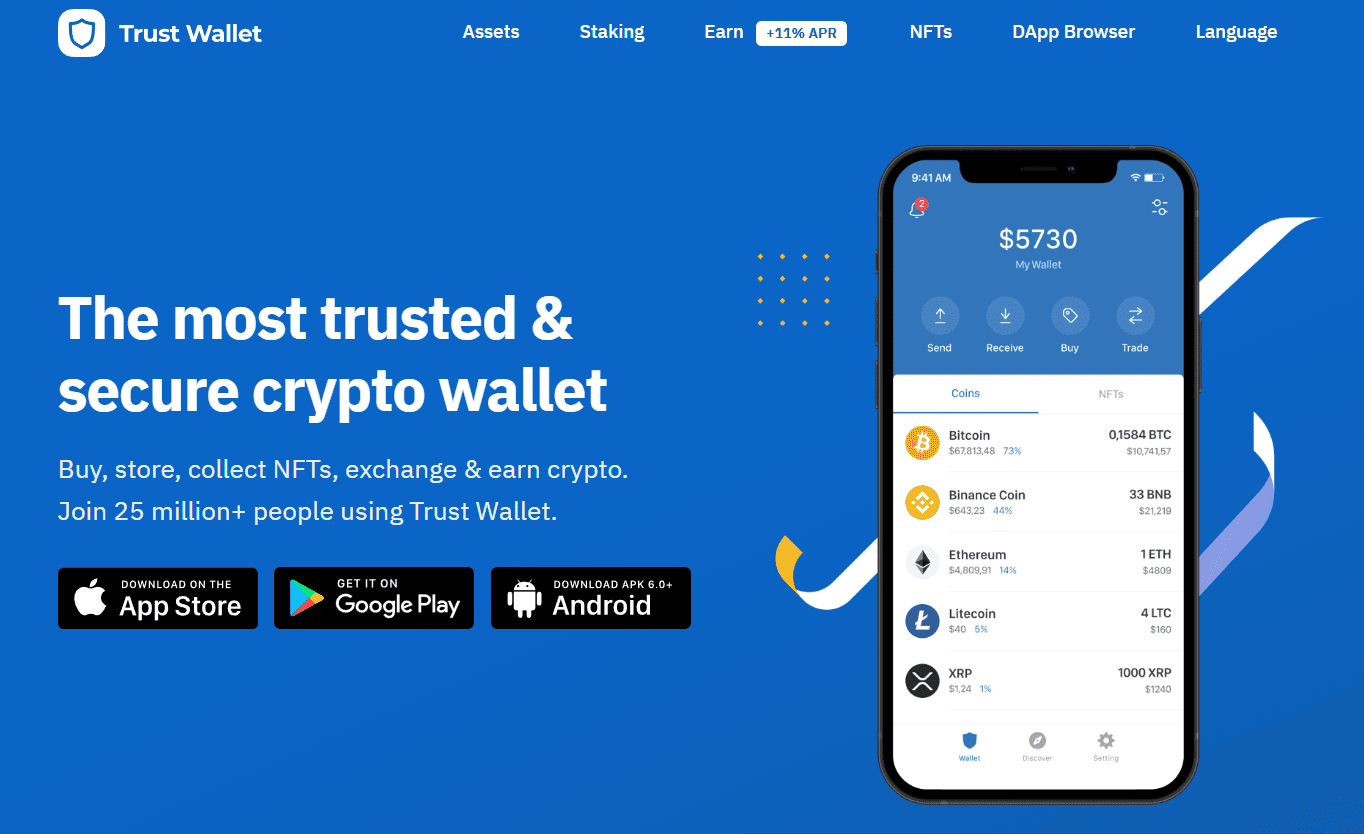
Your Complete Guide to Securely Using Trust Wallet
Trust Wallet is a decentralized mobile cryptocurrency wallet that allows users to safely store, send, and receive digital assets. It supports thousands of cryptocurrencies and tokens across multiple blockchains, offering a secure and user-friendly experience for beginners and advanced users alike.
This guide provides a comprehensive walkthrough of Trust Wallet, covering wallet setup, secure login, managing assets, using the built-in Web3 browser, staking, and best security practices. By following this guide, users can confidently manage their cryptocurrency portfolios while keeping their assets safe from unauthorized access.
What is Trust Wallet?
Trust Wallet is a non-custodial mobile wallet, which means that you have full control over your private keys. Unlike centralized exchanges, the wallet does not store your funds or keys on a server, giving you full ownership and control over your assets. Key features include:
Support for Multiple Blockchains: Store cryptocurrencies such as Ethereum, Bitcoin, Binance Coin, and thousands of tokens.
Non-Custodial Control: You control private keys and are the only one with access to your assets.
Integrated Web3 Browser: Interact with decentralized applications (dApps) directly from the wallet.
Staking Options: Earn rewards by staking supported cryptocurrencies.
User-Friendly Interface: Easy-to-use mobile interface for both beginners and advanced users.
The wallet provides a balance of security and convenience, making it one of the most widely used mobile wallets in the crypto space.
Why Secure Setup Matters
Cryptocurrency transactions are irreversible, so securing your wallet from the start is essential. A secure setup ensures:
Private Key Protection: Your keys never leave your device.
Safe Transactions: Transactions must be signed on the device, preventing unauthorized access.
Backup Readiness: Secure backup allows wallet restoration in case of device loss or failure.
Account Integrity: Protects against phishing attacks and malicious software.
A proper setup from the beginning minimizes risk and gives you peace of mind while using Trust Wallet.
Installing Trust Wallet
Trust Wallet is available for iOS and Android devices. To install safely:
Download the Official App: Only download from the official app store to avoid counterfeit apps.
Install the Application: Follow the prompts to install the app on your mobile device.
Open the App: Launch Trust Wallet and prepare to set up a new wallet or restore an existing one.
Using the official app ensures that your private keys remain secure and the software is free of malware.
Setting Up Your Wallet
When using Trust Wallet for the first time:
Create a New Wallet: Choose the option to generate a new wallet.
Accept Terms: Read and accept the terms and conditions.
Backup Your Recovery Phrase: Trust Wallet generates a 12-word recovery phrase. Write it down carefully and store it offline. This phrase is your only backup for wallet recovery.
Confirm Recovery Phrase: Re-enter the words in the correct order to verify your backup.
Set a PIN or Biometric Lock: Optional but highly recommended for additional device security.
The recovery phrase is the most important security feature. Losing it can result in permanent loss of access to your wallet.
Restoring a Wallet
If you already have a Trust Wallet:
Select Restore Wallet: Open the app and choose the restore option.
Enter Recovery Phrase: Input your 12-word phrase in the correct order.
Access Your Wallet: Once verified, all your assets and settings will be restored.
Always ensure you are using a secure device when restoring a wallet to avoid exposure of your recovery phrase.
Wallet Login and Security
Trust Wallet does not require a traditional username and password login. Instead, security relies on:
Recovery Phrase: The 12-word phrase grants access to your wallet.
PIN Code or Biometric Lock: Adds an extra layer of protection on your device.
Device Security: Secure your mobile device with passwords or biometric verification to protect the wallet.
Because Trust Wallet is non-custodial, your access and security depend entirely on these measures.
Understanding the Wallet Interface
The interface is designed to be intuitive:
Wallet Tab: Displays balances for all supported cryptocurrencies.
Browser Tab: Access Web3 dApps and decentralized exchanges.
Settings Tab: Manage security options, add custom tokens, and configure preferences.
Receive and Send: Easily send or receive cryptocurrencies using addresses or QR codes.
Familiarity with the interface helps you navigate safely and efficiently.
Adding and Managing Tokens
Trust Wallet supports thousands of tokens. To manage them:
Enable Tokens: Go to settings and enable tokens you wish to track.
Add Custom Tokens: Enter the contract address for tokens not listed by default.
Send and Receive: Use addresses or QR codes to transfer assets securely.
Monitor Portfolio: Track balances, transaction history, and value changes.
Managing multiple tokens from a single wallet simplifies portfolio oversight.
Using the Web3 Browser
The built-in Web3 browser allows interaction with decentralized applications:
Decentralized Exchanges: Swap tokens directly from the wallet.
DeFi Platforms: Lend, borrow, or stake assets safely.
NFT Marketplaces: Buy, sell, or hold digital collectibles.
GameFi Platforms: Participate in blockchain-based gaming.
Transactions through the Web3 browser require signing from the wallet, ensuring your private keys are never exposed.
Staking and Earning Rewards
Trust Wallet allows staking of supported assets:
Select the Cryptocurrency: Choose a supported token eligible for staking.
Delegate Tokens: Assign tokens to a validator or staking pool.
Earn Rewards: Receive staking rewards periodically.
Track Performance: Monitor staking rewards and withdraw when needed.
Staking provides a way to grow your holdings while contributing to blockchain network security.
Securing Your Wallet
Trust Wallet security relies on multiple layers:
Recovery Phrase Backup: Never store digitally or share online.
PIN or Biometric Lock: Adds device-level protection.
Device Security: Keep your smartphone free from malware and unauthorized access.
Caution with dApps: Only use trusted decentralized applications.
Maintaining these practices ensures that your wallet and assets remain secure.
Common Mistakes to Avoid
Even experienced users can make mistakes:
Losing the recovery phrase.
Sharing recovery phrase with anyone.
Using insecure networks when transacting.
Accessing unverified dApps.
Storing recovery phrase digitally.
Avoiding these mistakes protects against permanent loss of funds.
Backup and Recovery Tips
To safeguard your wallet:
Write Down Recovery Phrase Offline: Use a secure medium like a notebook or safe storage.
Multiple Physical Backups: Keep in different secure locations.
Test Recovery Periodically: Ensure you can restore your wallet from the recovery phrase if necessary.
A solid backup strategy ensures continuous access to your assets.
Receiving and Sending Cryptocurrency
Trust Wallet makes transactions simple and secure:
Receiving: Share your wallet address or QR code with the sender.
Sending: Enter recipient address carefully and confirm transactions. Use the network fee appropriate for the blockchain.
Transaction Verification: Always double-check addresses and amounts before confirming.
These steps prevent accidental loss or sending assets to incorrect addresses.
Monitoring and Tracking Transactions
Trust Wallet allows you to:
View transaction history for each asset.
Track confirmation status on the blockchain.
Monitor transaction fees and network performance.
Being proactive about monitoring ensures transparency and reduces risk of errors.
Mobile Security Tips
Since Trust Wallet is mobile-only, device security is paramount:
Use PINs or biometric locks on your phone.
Avoid public Wi-Fi for transactions.
Keep the wallet app updated to the latest version.
Regularly review permissions for installed apps.
Device-level precautions complement wallet security measures.
Advanced Features and Tips
Custom Tokens: Add and manage tokens not supported by default.
NFT Management: Store and view digital collectibles.
Cross-Chain Support: Transfer assets across supported blockchains safely.
dApp Permissions: Regularly review and revoke unnecessary permissions.
Advanced users can take full advantage of Trust Wallet while maintaining security.
Getting Started Safely with Trust Wallet
To begin safely:
Install Trust Wallet from official sources.
Create a new wallet and back up the recovery phrase offline.
Set a strong PIN or use biometric locks.
Explore wallet features, manage multiple tokens, and interact with trusted dApps.
Monitor security and follow best practices to safeguard assets.
Proper setup and adherence to security guidelines ensure that Trust Wallet provides a secure, convenient, and reliable crypto management experience.